Canyons and caves · Manitou Springs
Williams Canyon and the cave country
A slot of grey limestone cuts north from downtown Manitou, and the same mineral water that fizzes from the town's fountains has hollowed caves into its walls.
Walk to the north end of downtown Manitou Springs and the valley narrows fast. Within a few hundred yards of the shops, the walls of a tight, twisting canyon close in on both sides: grey and buff limestone, layered like a stack of old books, rising straight up from a dry creek bed. This is Williams Canyon, and it is unlike the granite and red sandstone that make up most of the scenery around Pikes Peak.
The difference is the rock. Limestone dissolves in slightly acidic water, and over a very long time water has worked its way through these layers, widening cracks into passages and passages into caves. Some of those caves sit high in the canyon walls, and one system above the canyon has been shown to visitors since the late 1800s.
Grey rock in a red-rock town
Most of the rock you see around Manitou is either the pink granite of Pikes Peak or the red sandstone of the hogbacks and Garden of the Gods. Williams Canyon exposes an older, quieter set of layers in between: limestones and dolomites laid down on the floor of shallow seas hundreds of millions of years ago, long before the mountains rose.
These layers matter to the town in a way that is easy to miss. They are part of the plumbing behind the mineral springs. Water that falls on the peak sinks into the granite, moves down and east, and passes through limestone like this before it rises again in Manitou. On the way it picks up carbon dioxide and dissolved minerals, which is why the spring water fizzes and why each fountain tastes different.
Floods through a narrow slot
A canyon this narrow funnels water. Most of the time the creek bed in Williams Canyon is dry or close to it, but heavy summer storms on the slopes above can send a sudden flood racing through the slot and straight into downtown Manitou, where the canyon opens out at Canon Avenue.
That has happened many times in the town's history, and it became a serious worry after the 2012 Waldo Canyon fire burned the slopes north of town. With the vegetation gone, rain ran off the scorched ground instead of soaking in, and in the summers that followed, flash floods carrying mud, rocks and burned timber came down Williams Canyon and into the streets. The town and county have since built flood defences and warning systems, and the slopes are slowly greening again.
The lesson for visitors is simple. Do not linger in the canyon bottom when thunderstorms are building over the mountains, and if you hear a roar upstream or see the water rise or turn muddy, climb to high ground at once.
6,400 to 14,115 feetAnother stop on the mapAltitude, afternoon storms and how to plan a dayHow the caves were carved
The caves in and above Williams Canyon formed underground, long before the canyon cut down to expose them. Groundwater carrying dissolved carbon dioxide forms a weak acid, and over a very long time that acid ate away at the limestone along cracks and bedding planes. Some geologists also see signs of warmer, mineral-rich water rising from below, the same kind of water that still reaches the surface at the springs.
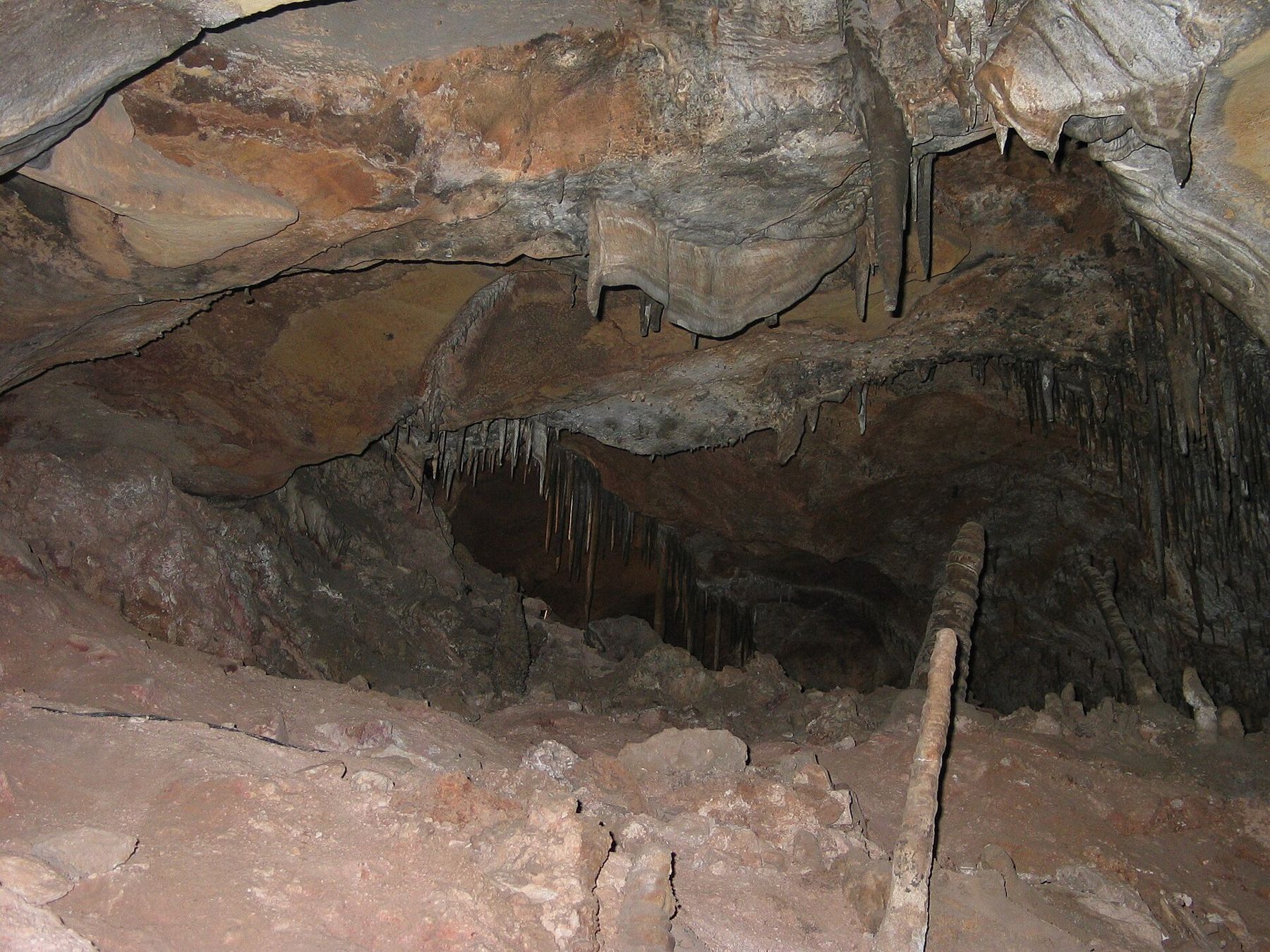
Once the canyon cut down and the water table dropped, the passages drained and filled with air. Then a slower process began. Water seeping through the rock above dripped into the open passages, losing a little carbon dioxide as it did, and left behind thin films of calcite. Drip by drip, those films built up into the cave formations people come to see.
Helictites, flowstone and cave popcorn
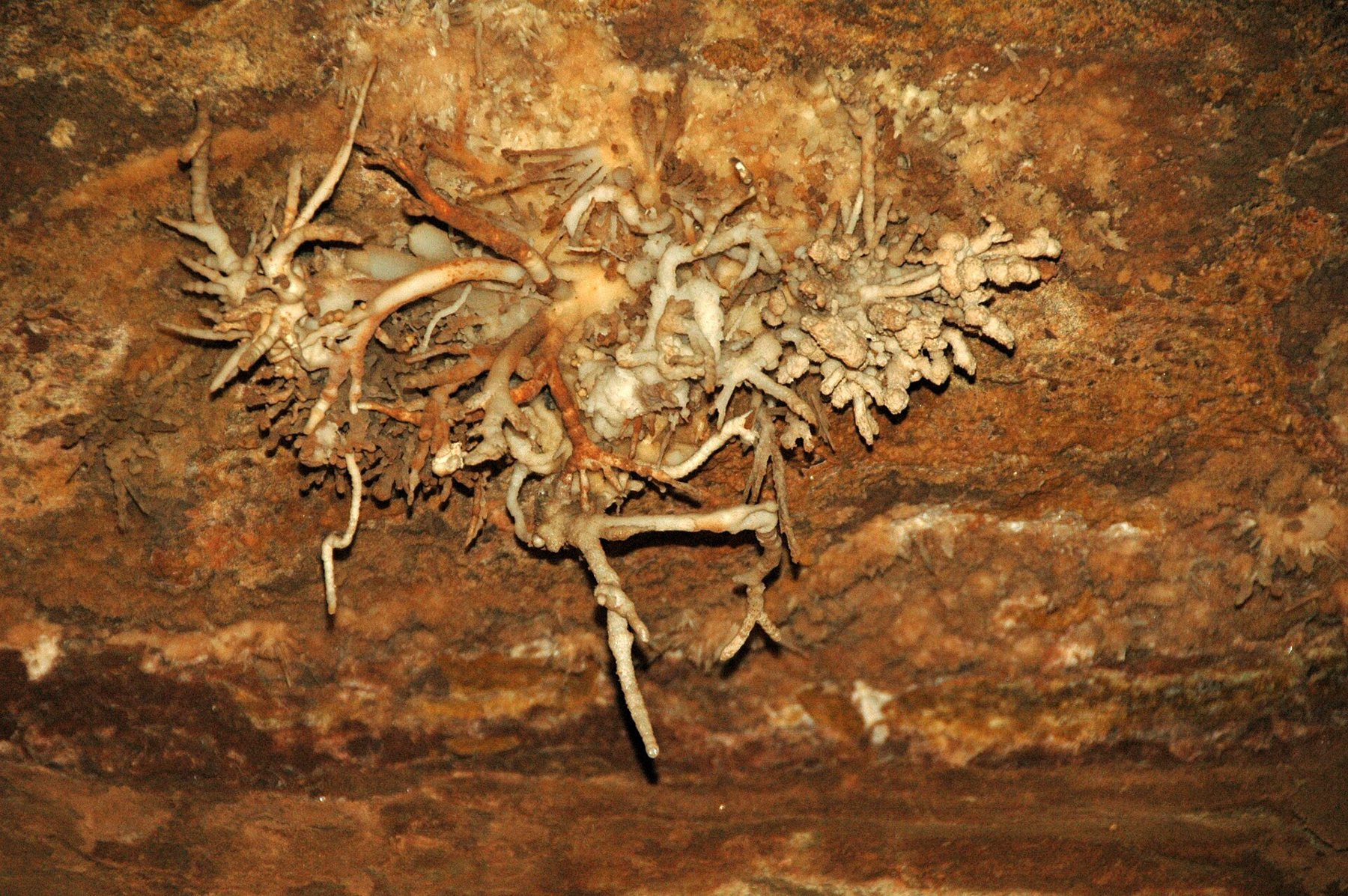
The familiar cave shapes are all here. Stalactites hang from ceilings, stalagmites rise to meet them, and flowstone coats walls in smooth, rippled sheets. But the caves near Manitou are known especially for helictites: thin, twisting formations that grow sideways, curl back on themselves and seem to ignore gravity altogether.
Helictites form when water moves through a tiny central channel by capillary action rather than dripping, so the crystals grow in whatever direction the channel bends. The result looks less like a cave and more like a coral reef or a tangle of roots. Knobbly clusters known as cave popcorn and delicate needles of other minerals add to the effect.
All of these formations grow extremely slowly, and the oils on a single fingertip can stop a formation growing or stain it for good. Look closely, take photographs, and keep your hands to yourself.
Seeing the caves without a spelunking kit
Most of the small wild caves in and around Williams Canyon are closed to the public, gated to protect the formations and to keep people out of tight, unstable passages. Do not try to enter them.
The straightforward way underground is the long-running show cave above the canyon, a private business reached by its own road off Highway 24 that runs guided tours through lit passages. Tour types, times and prices change, so check with the operator before you go. The cave stays cool all year, so a light jacket helps even in summer, and tours involve stairs and uneven, sometimes damp floors.
The canyon road itself has had closures over the years because of floods and rockfall, and conditions change. Check locally whether the road through the canyon is open to cars or walkers before you set off.
From the canyon mouth back into town
The canyon mouth is only a few minutes' walk from the centre of Manitou, which makes it an easy add-on to a stroll between fountains. Pair a cave visit with a slow afternoon in town, or with a morning among the red fins at Red Rock Canyon a short drive east. For more canyon scenery with waterfalls rather than caves, North Cheyenne Cañon on the other side of Colorado Springs makes a good contrast.
The pictures on this page were shared under open licences; see who took them.