Red rock · Colorado Springs
Red Rock Canyon Open Space
Old quarry walls, red sandstone fins and long views up to the peak, on land that drew plans for houses and a golf course before the city bought it.
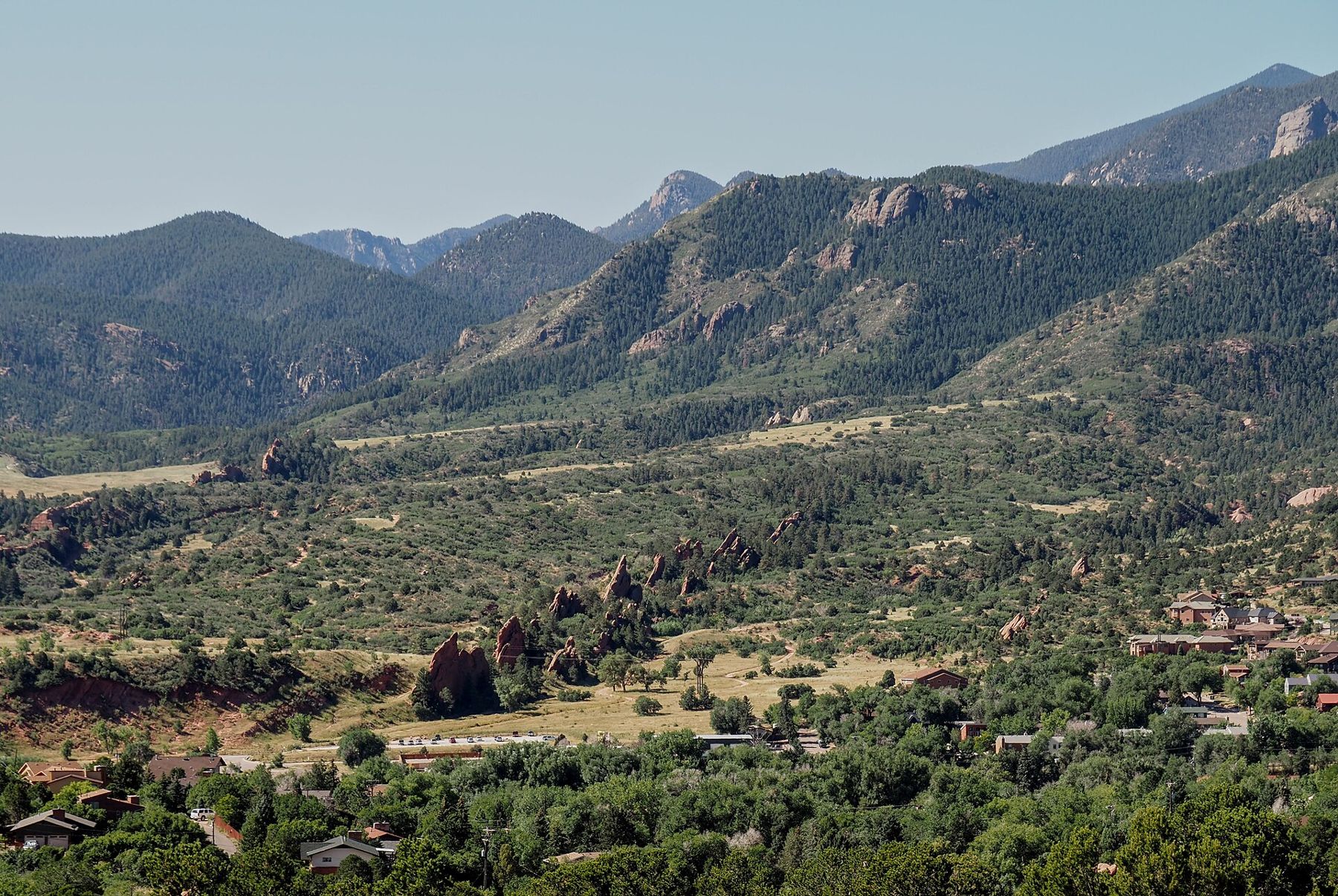
Drive from Colorado Springs toward Manitou on Highway 24 and, just before the road bends into the foothills, a gap opens on the left. Behind it sits a long valley of red rock: tilted sandstone fins, a pond, meadows of tall grass and, along one side, cliffs cut into neat stair steps. That is Red Rock Canyon Open Space, a city park that most visitors drive straight past on their way to somewhere better known.
It belongs to the same band of red rock that makes Garden of the Gods famous, a mile or so to the north. The fins here are lower and less crowded together, but the colour is the same, and the trails feel looser and quieter. On a weekday morning you can walk for an hour and meet more mule deer than people.
Stone cut for a growing city
The stair-stepped walls are the giveaway. From the late 1800s into the early 1900s, workers cut blocks of red and buff sandstone out of these ridges and hauled them away as building stone. The rock split well and took a clean edge, and pieces of it went into buildings in the young towns along the Front Range. When demand for local stone faded, the quarries were left as they stood: flat-faced walls with tool marks, square ledges and spoil heaps now softened by scrub oak and juniper.
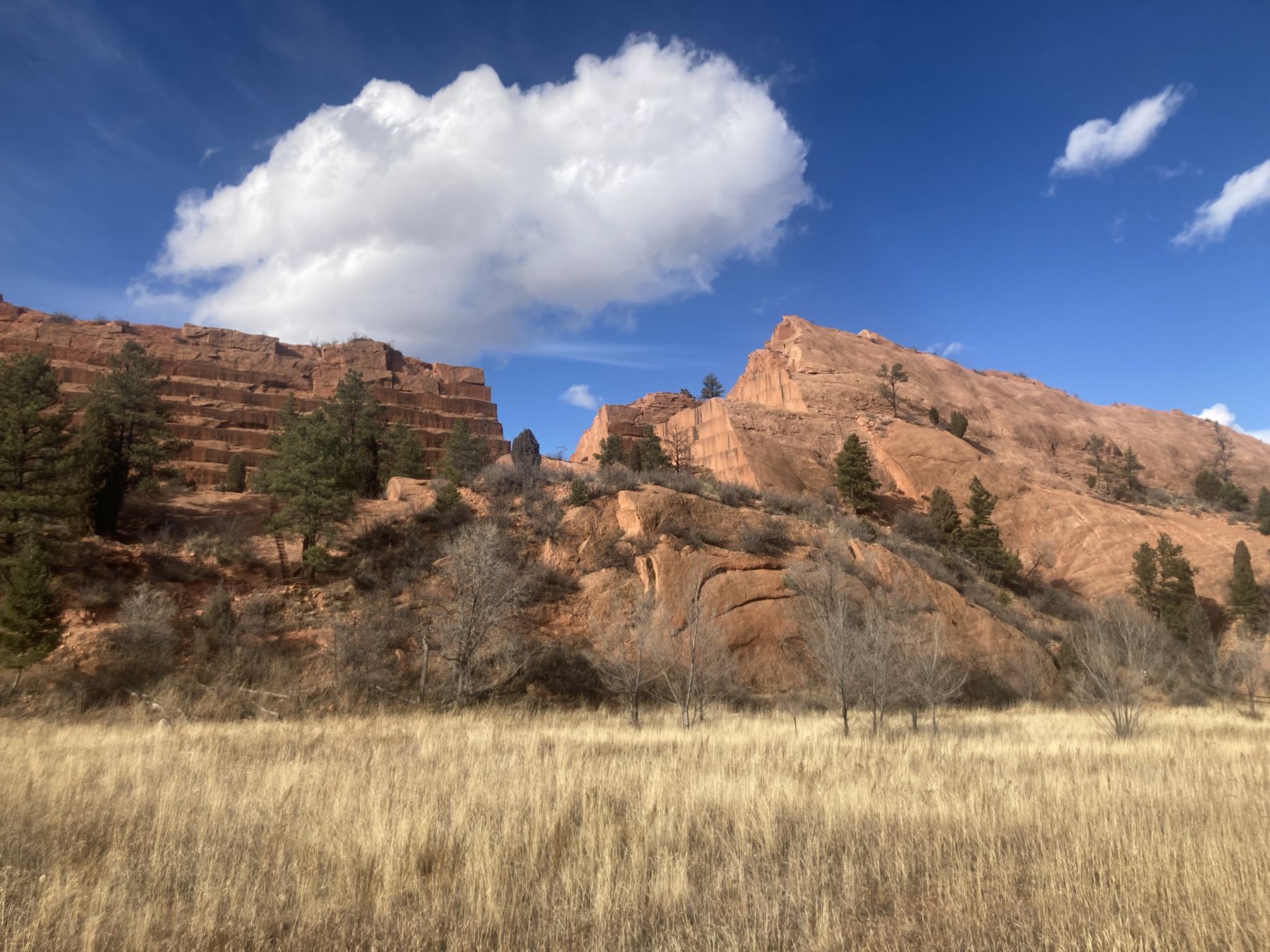
Walk the Quarry Pass Trail or the paths that run beneath the main walls and you can read the old work in the rock. Long straight scars mark where blocks were split off. In places the cut faces stand taller than a house. Stay off the ledges and away from the bases of the walls after rain or a freeze: quarried rock is not as settled as a natural cliff, and loose pieces do come down.
The valley that nearly became a subdivision
For most of the twentieth century the canyon was private land. Over the decades it saw grazing, gravel digging and a string of development plans, including housing and a resort with a golf course. None of them got far. Local residents pushed for years to keep the land open, and early in the 2000s the City of Colorado Springs bought it with the help of open-space funds and grants.
Since then the city has added neighbouring parcels, built a trail network and let the meadows recover. The result links up with Section 16 to the south and with paths toward Manitou Springs to the west, so a long day on foot can run from one end of the foothills to the other.
Fins, meadows and the long view
The main canyon trail runs up the valley floor past the pond and through the meadows, gaining height slowly. Side trails climb onto the fins themselves, where the sandstone tilts up at a steep angle and the path squeezes between walls of red rock. Up there, the view opens north to Garden of the Gods and the plains, and west to the dark ridges leading up toward Pikes Peak.
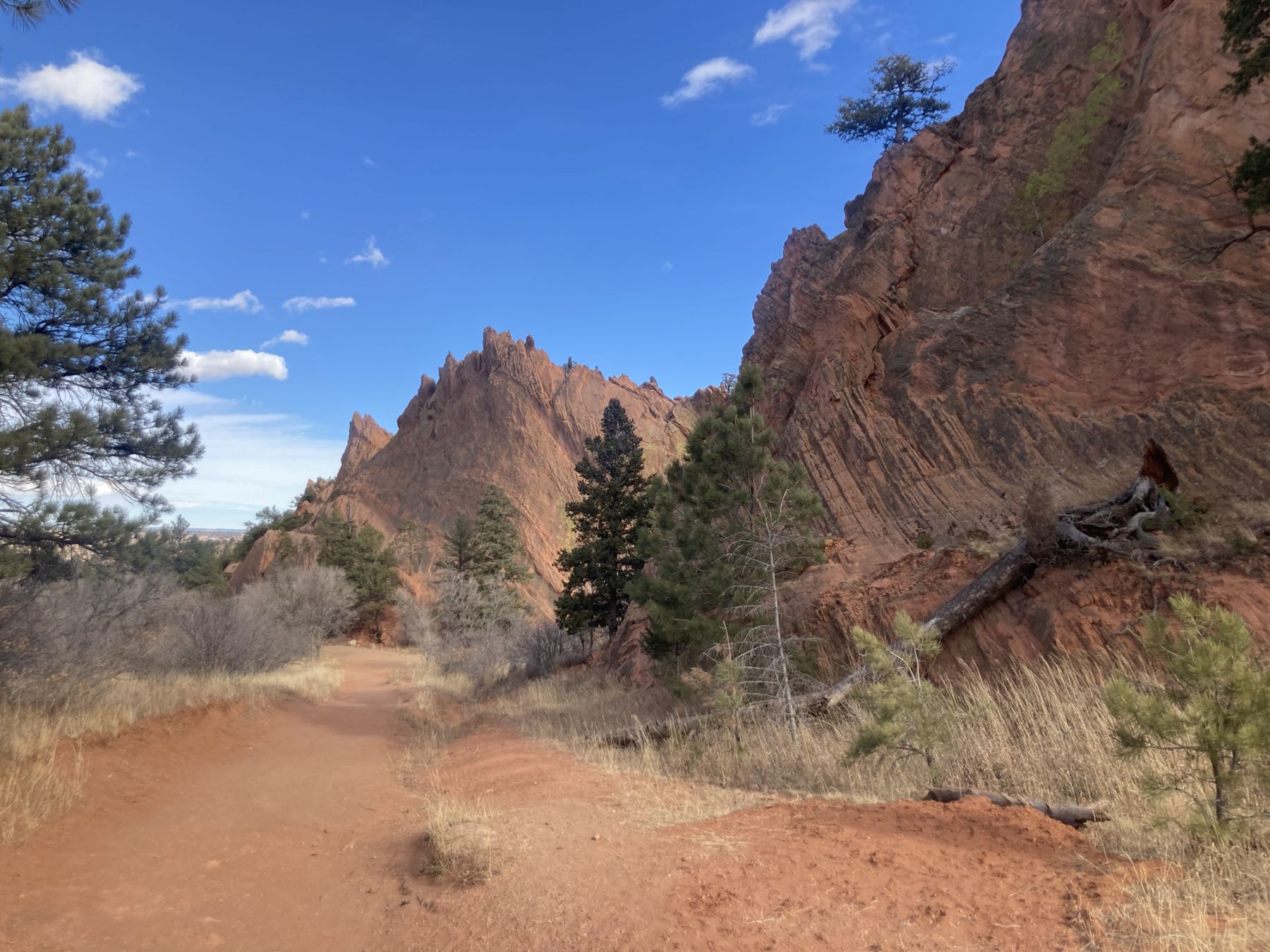
For a short outing, a loop through the lower canyon takes about an hour and stays fairly level. For more, the trails that climb toward the upper ridges and loop back through the next valley over make a half-day of it, with several hundred feet of climbing and a good deal of loose red gravel underfoot. The trail map at the main trailhead shows the current network; new links and reroutes appear every few years, so it pays to look before setting off.
About 6,400 feetAnother stop on the mapGarden of the Gods at sunriseMountain bikers share many of the trails, and some routes are set aside for bikes, dogs or walkers only. Rock climbers use the fins too, under city rules that cover where and how climbing is allowed. Signs at the trailheads explain who can use what; check the rules before you bring a bike, a dog or a rope.
Quieter than its famous neighbour
Garden of the Gods draws the crowds, and on a summer weekend its main paths fill by mid-morning. Red Rock Canyon is the release valve. The rock is a little less dramatic, there is no paved loop through the middle and there is no visitor centre, but the parking is usually easier and the trails spread people out quickly.
It also suits the hours when the light is low. Early morning puts the sun on the quarry walls and turns the sandstone almost orange. Late afternoon in autumn lights up the grass in the meadows. Winter visits work well on dry days, since the low-lying trails often clear of snow quickly, but north-facing stretches can hold ice for days after a storm.
Between the city and the springs
The open space sits right on the edge of town. Manitou Springs is a few minutes' drive west, and its public fountains make a good finish after a dusty walk: the mineral springs each taste a little different, and the water is free. In the other direction, Old Colorado City is a short drive east along Colorado Avenue.
The main trailhead lies off Highway 24 at Ridge Road, with parking and restrooms; a smaller access point sits on the south side of the park. There is no fee to enter. Bring more water than you think you need, since the trails have none, and carry a layer even on warm days: the wind picks up on the ridgetops, and summer afternoons can bring a thunderstorm in quickly. If thunder starts while you are up on the fins, come down to the valley floor and head for the car.
The pictures on this page were shared under open licences; see who took them.