The springs · Manitou Springs
Miramont Castle on the hillside
A French priest built a house of many styles on the slope above Ruxton Avenue in 1895. It became a sanatorium, nearly fell apart, and now stands as a museum.
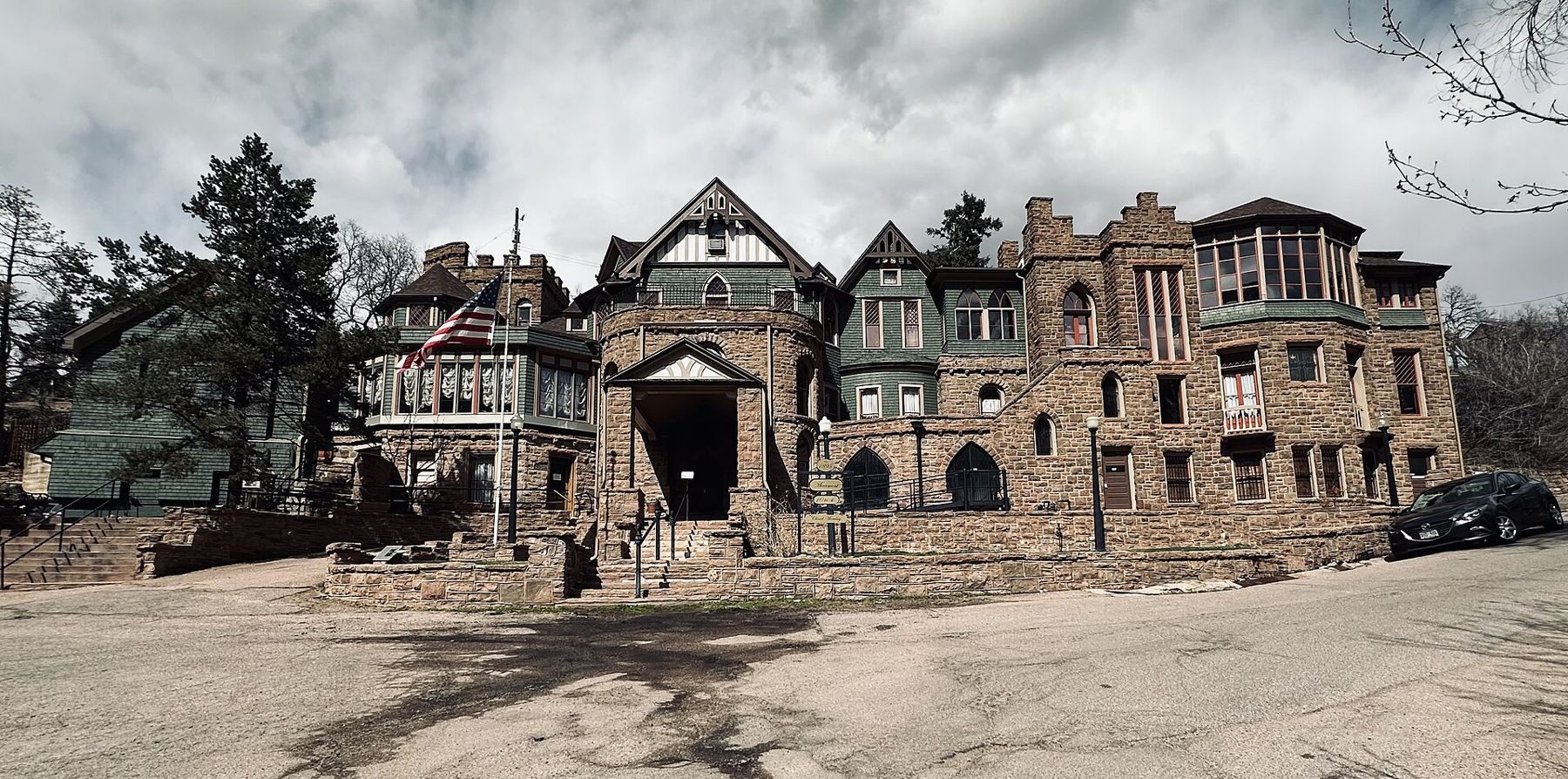
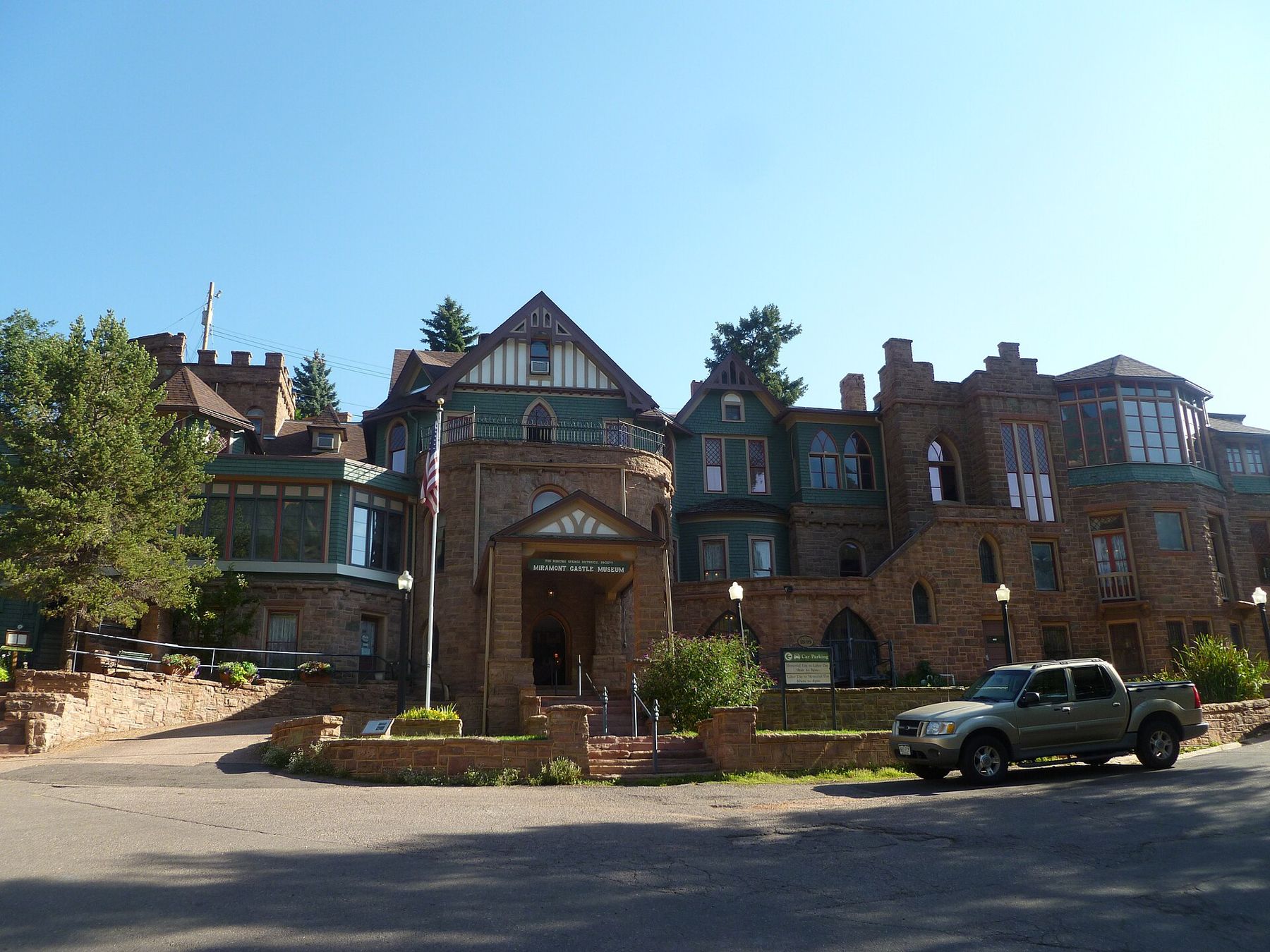
From most of downtown Manitou Springs you can pick out Miramont Castle on the hillside above Ruxton Avenue: a crowd of towers, gables, stone walls and shingled bays that seem to belong to several different buildings at once. In a sense they do. The house was designed to mix styles, and the result is one of the odder and more likeable landmarks in the Pikes Peak region.
It is a museum now, but its story runs through faith, illness, decline and rescue, and it mirrors the story of the health-resort town below it.
A priest who built for the view
Miramont was built in 1895 for Father Jean Baptiste Francolon, a French Catholic priest who came to Manitou Springs at a time when the town was drawing people for its air and its mineral water. He chose a steep site on the slope above Ruxton Avenue, with the town spread out below and the mountains close behind.
The house blends several architectural styles, from Gothic arches to Tudor half-timbering and heavy Romanesque stonework, with a hint of a French chateau in the towers and rooflines. Rather than settling on one look, the builders let each wing and elevation borrow from a different tradition. Thick walls of local stone anchor it to the hillside.
Francolon did not stay long. Within a few years he had left Manitou, and the house passed into other hands.
The name itself suits the site. Miramont is usually read as a French-flavored phrase about looking at the mountain, and from the upper windows that is exactly what the house does, with the slopes above Ruxton Avenue filling the view on one side and the valley opening on the other.
From sanatorium to near ruin
Manitou Springs and nearby Colorado Springs were known for sanatoriums, places where people with tuberculosis and other lung illnesses came to rest in dry, high, sunny air. Miramont joined that world when an order of Catholic sisters took it over and ran it as a sanatorium, caring for patients in the building's many rooms.
Later in the twentieth century the house was divided into apartments, and over time it fell into poor repair. By the 1970s it was at real risk. A local historical society stepped in, bought the building and began the long work of restoring it. It has been run as a museum since then, with rooms furnished to show how a house like this looked and felt in its early years.
6,600 to 8,600 feetAnother stop on the mapThe Manitou Incline, step by stepInside the rooms
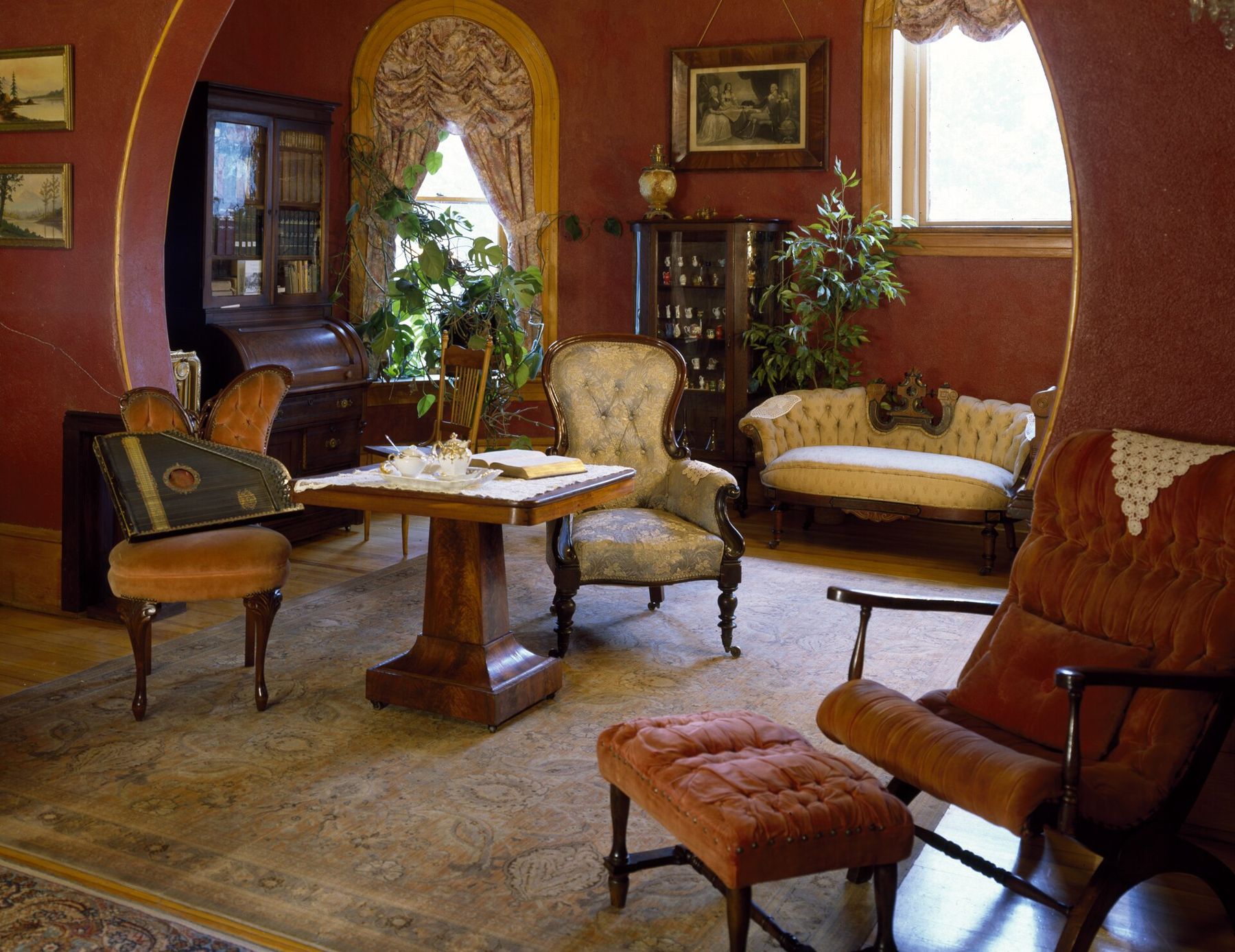
Inside, the mix of styles continues. Rooms open into each other through broad arches, ceilings change height from one space to the next, and windows of different shapes catch the light from different directions. Period furniture, rugs and household objects fill the main floors.
Expect stairs. A house built into a slope has levels that do not line up neatly, and getting from one floor to another can mean several short flights. If stairs are a concern, check the museum's current accessibility information before you go. Opening days, hours and admission change with the season, so check those too, along with any special exhibits or events.
The climb from Ruxton Avenue
Miramont sits only a short distance above Ruxton Avenue, but the streets that reach it are steep. From downtown, walk up Ruxton and follow the signs for the castle uphill. It takes most people a few minutes, with a pause or two to catch their breath.
The walk pairs well with the springs. The Iron Geyser and the other Ruxton Avenue fountains are close by, and you can easily fold Miramont into a longer walk around the mineral springs of the town. Parking near the castle is limited and the streets are narrow, so walking up from town is often simpler than driving.
If you are heading farther up Ruxton Avenue toward the trailheads or the cog railway depot, Miramont makes a gentle first stop before the bigger climbs.
Looking back over town
Part of the reason to make the climb is the view back down. From the grounds you look over rooftops, church spires and the green line of trees along the creek, with the red rocks and hills that frame the valley beyond. It is a good place to get your bearings: Manitou Avenue runs along the valley floor below, Ruxton Avenue climbs toward the mountain, and the slopes rise steeply on every side.
Take a slow lap of the outside before or after the museum. The walls show the mix of styles more plainly than the rooms do: a round stone tower here, a pointed gable there, a run of tall windows that would suit a chapel, and shingled upper floors that look like a different house altogether.
Late afternoon light is warm on the stone, but in summer that is also storm time. Plan an early visit if the forecast calls for thunderstorms, and you will have the quieter part of the day as well.
A house that matches its town
Miramont makes the most sense when you think of it alongside Manitou Springs itself. The town was built on the idea that its water and air could heal, and for decades people came here hoping to get well. Miramont went from a private retreat to a place of care, then nearly disappeared, and was saved by people who wanted the town's history kept in view.
That arc, from ambition to decline to careful restoration, is the same one the public mineral fountains followed. Visiting both on the same morning gives you a clear sense of what made this small mountain town different from the cities around it.
The pictures on this page were shared under open licences; see who took them.