The climb · Pikes Peak
Pikes Peak by the cog railway
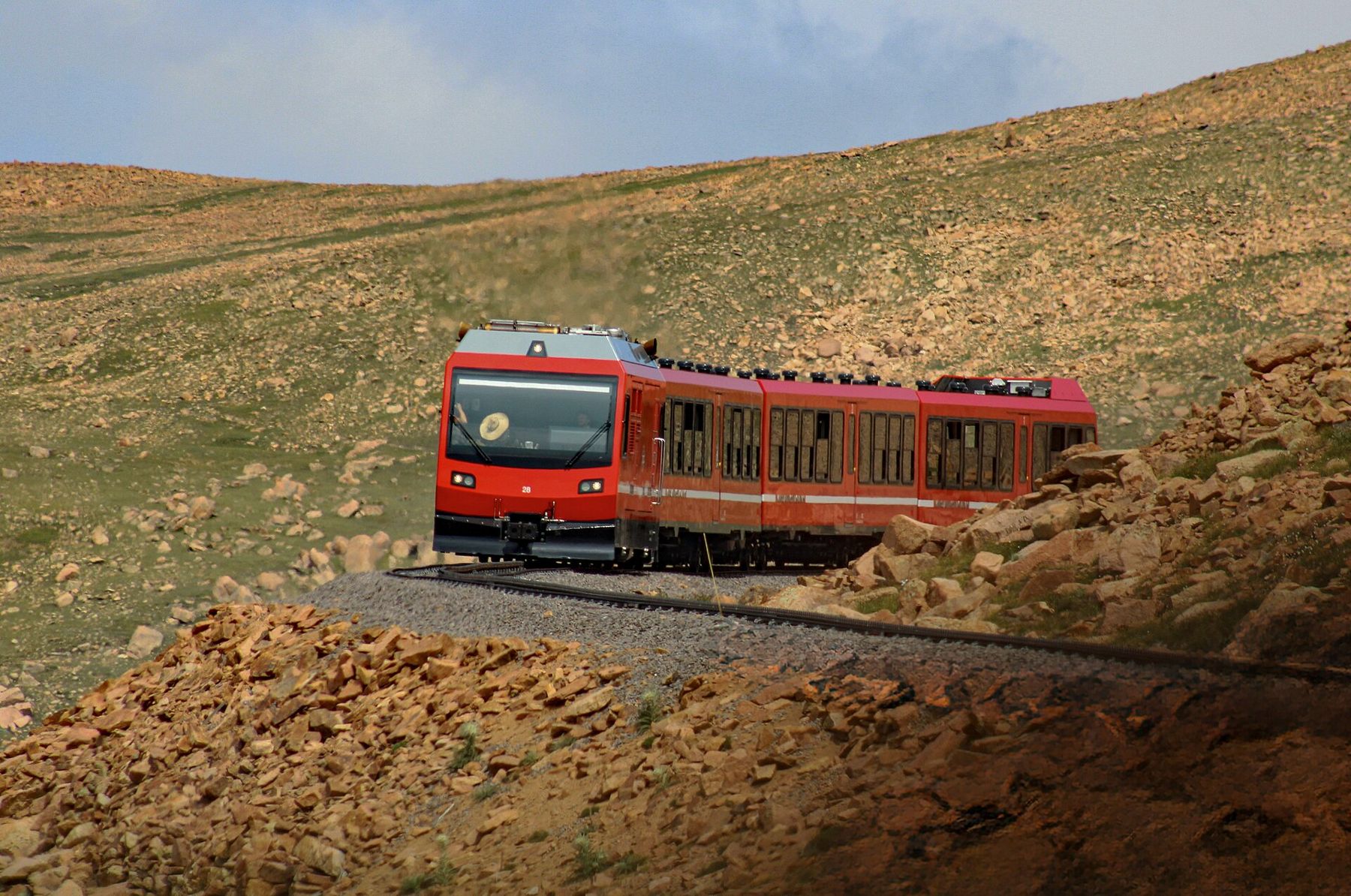
A toothed rail, a steep canyon and a climb of about 7,500 feet: the Pikes Peak cog railway leaves Ruxton Avenue and rides above the trees to the top of the mountain.
There are three ways up Pikes Peak from Manitou Springs: on foot, by car and by train. The train is the one that lets you sit back and watch the whole mountain go by. The Pikes Peak cog railway leaves from a depot at the top of Ruxton Avenue, a short walk above the town's mineral fountains, and climbs about 7,500 feet to the summit at 14,115 feet.
It is one of the highest railways in the world and the highest in North America, and it has been carrying passengers up the mountain since the 1890s. After a long closure for a rebuild, it reopened in 2021 with new track and new trains.
How a train climbs a mountain
Ordinary trains rely on the grip of steel wheels on steel rails, and that grip runs out on steep slopes. A cog railway solves the problem with a toothed rack laid between the running rails. Gear wheels under the train mesh with the rack, so the train climbs and descends by pulling itself along the teeth rather than relying on friction. That lets it handle grades far steeper than a normal railway could manage.
The result feels unusual from the inside. On the steepest pitches you can feel the train lean back into the slope, and from a window near the front you can sometimes see the line climbing ahead like a staircase. The train moves at an unhurried pace, which gives you time to watch the scenery change.
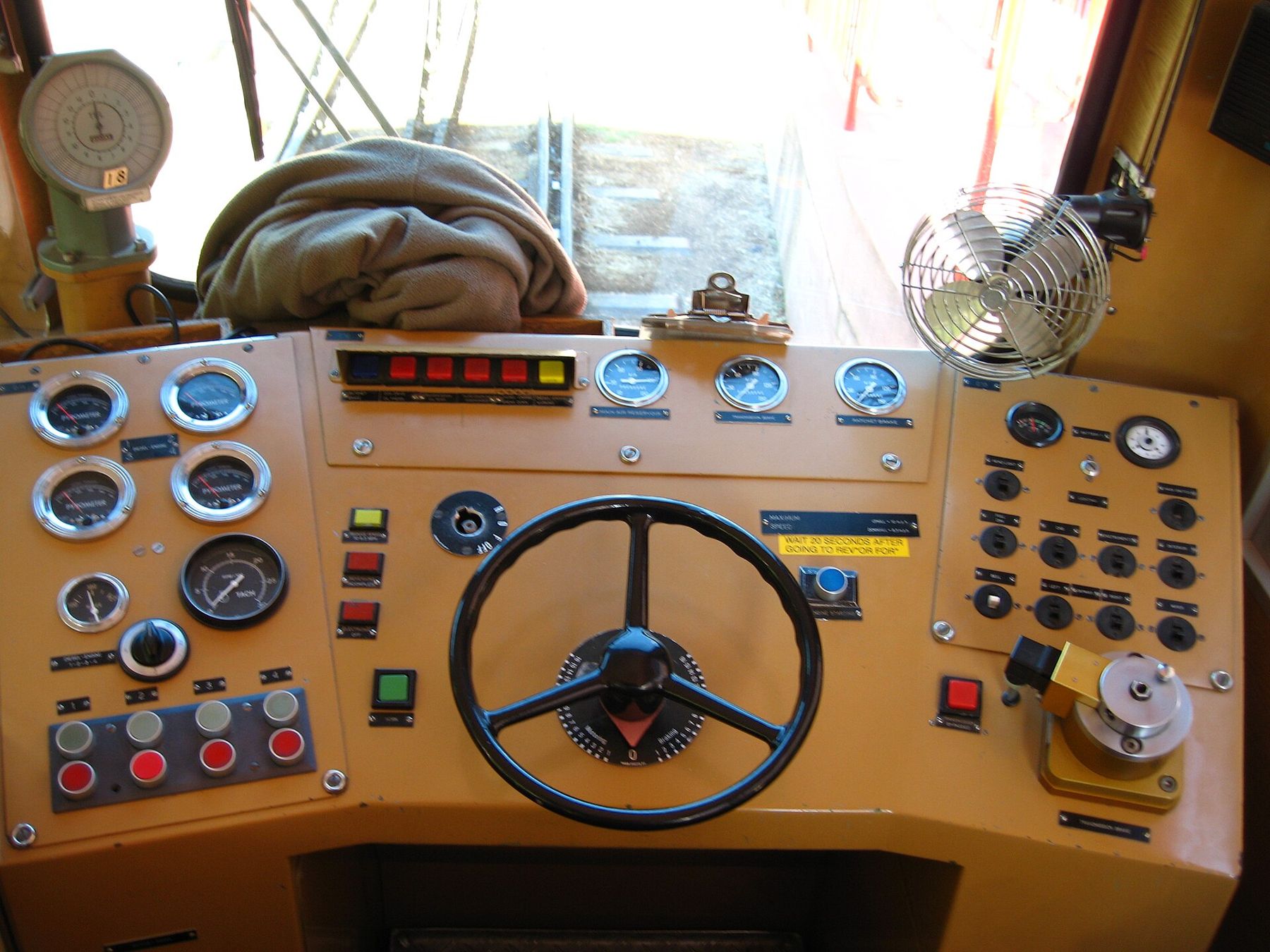
The idea came from the Alps, and the Pikes Peak line borrowed heavily from Swiss practice from the start. The first trains were pushed by small steam engines; later came diesel railcars, and now a newer fleet built for the reopened line. Each generation has carried visitors along essentially the same route.
A rebuilt line and a new start
By the 2010s the old track and equipment were worn, and the railway closed in 2017. The rebuild replaced the track and much of the infrastructure, and new trains arrived for the reopening in 2021. The same year, a new summit visitor center opened at the top, so the whole experience was refreshed at once.
That means the ride today is smoother and more modern than the one older visitors may remember, though the route, the views and the thin air at the top are unchanged.
Pieces of the older railway still turn up around Manitou Springs and beyond. A small steam locomotive from the early days was long displayed near the depot, and retired railcars have ended up in museums. They are a reminder of how long trains have worked this slope, and of how much effort it has taken to keep them running in such a hard place.
6,600 to 8,600 feetAnother stop on the mapThe Manitou Incline, step by stepThe ride up, from canyon to tundra
The train leaves Ruxton Avenue and heads straight into a narrow canyon along Ruxton Creek. The first part of the climb is the steepest-looking: rock walls, pines and the sound of the creek close below the windows. Slowly the canyon opens into forest of pine, fir and aspen, with glimpses back down toward the plains.
Around 11,500 to 12,000 feet the trees thin and stop. Above tree line the land turns into a wide sweep of broken pink granite and low alpine plants, with snow patches lingering into summer. On a clear day the view east reaches far out over the plains, and the line of the Barr Trail can sometimes be seen on the slopes as you climb.
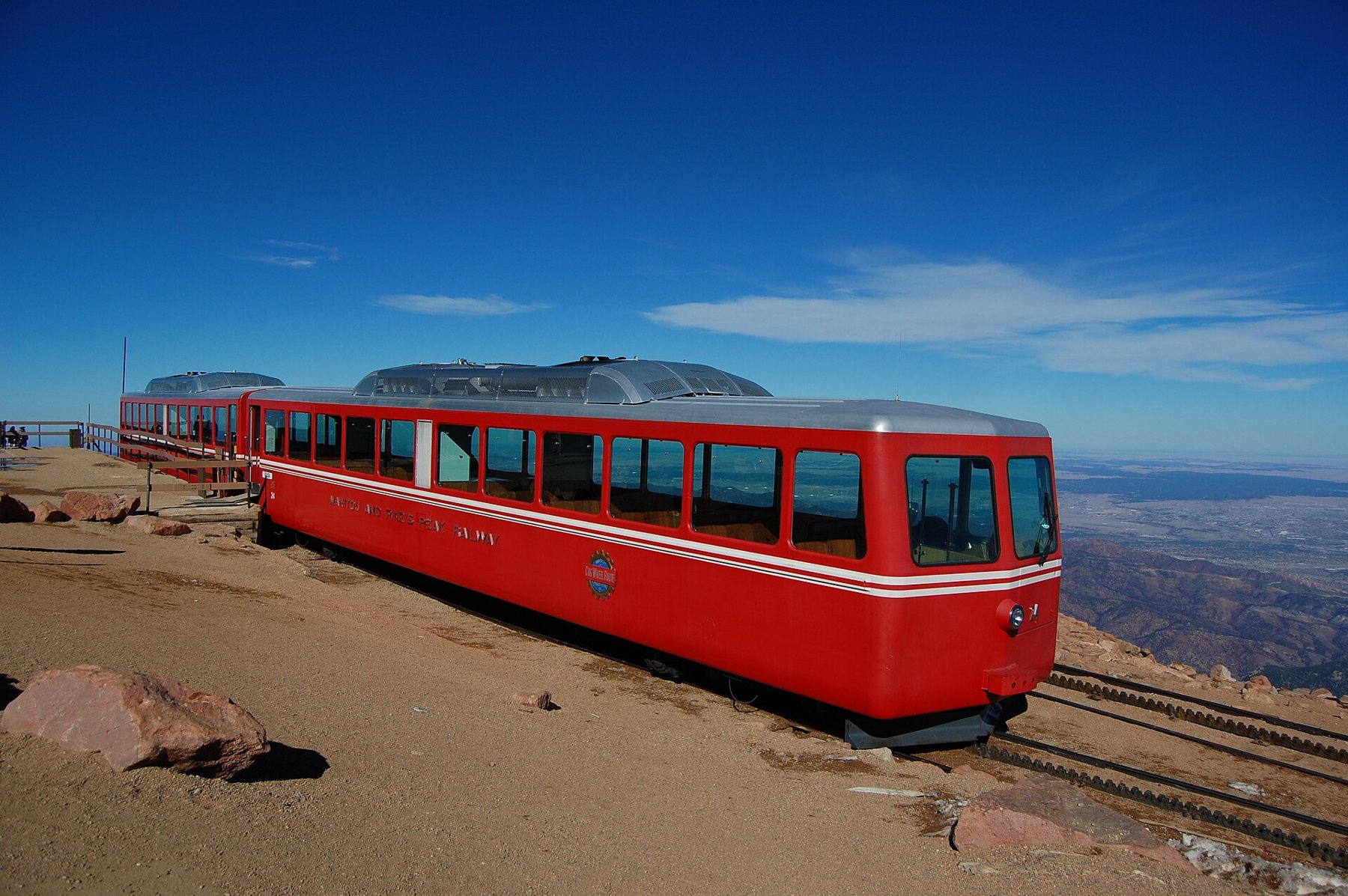
The ride up takes roughly an hour and change, and the round trip, including time at the top, fills a good part of a morning or afternoon. Check the current schedule for departure times and how long trains wait at the summit, since that window is set and the train will not wait for stragglers.
The ride up is smoother than it used to be, but the air at the top is exactly as thin as ever.
Time at 14,115 feet
The ride up is smoother than it used to be, but the air at the top is exactly as thin as ever. At the summit there is much less oxygen in each breath than in town, and arriving by train means you have done none of the gradual adjusting a hiker does on the way up. That is why altitude sickness is common among train and car visitors.
Step off slowly. Walk, do not hurry, to the viewpoints and the summit visitor center. Drink water, eat something light, and sit down if you feel off. Headache, nausea, dizziness and unusual shortness of breath are the classic signs. The cure is going down, and the return train does exactly that.
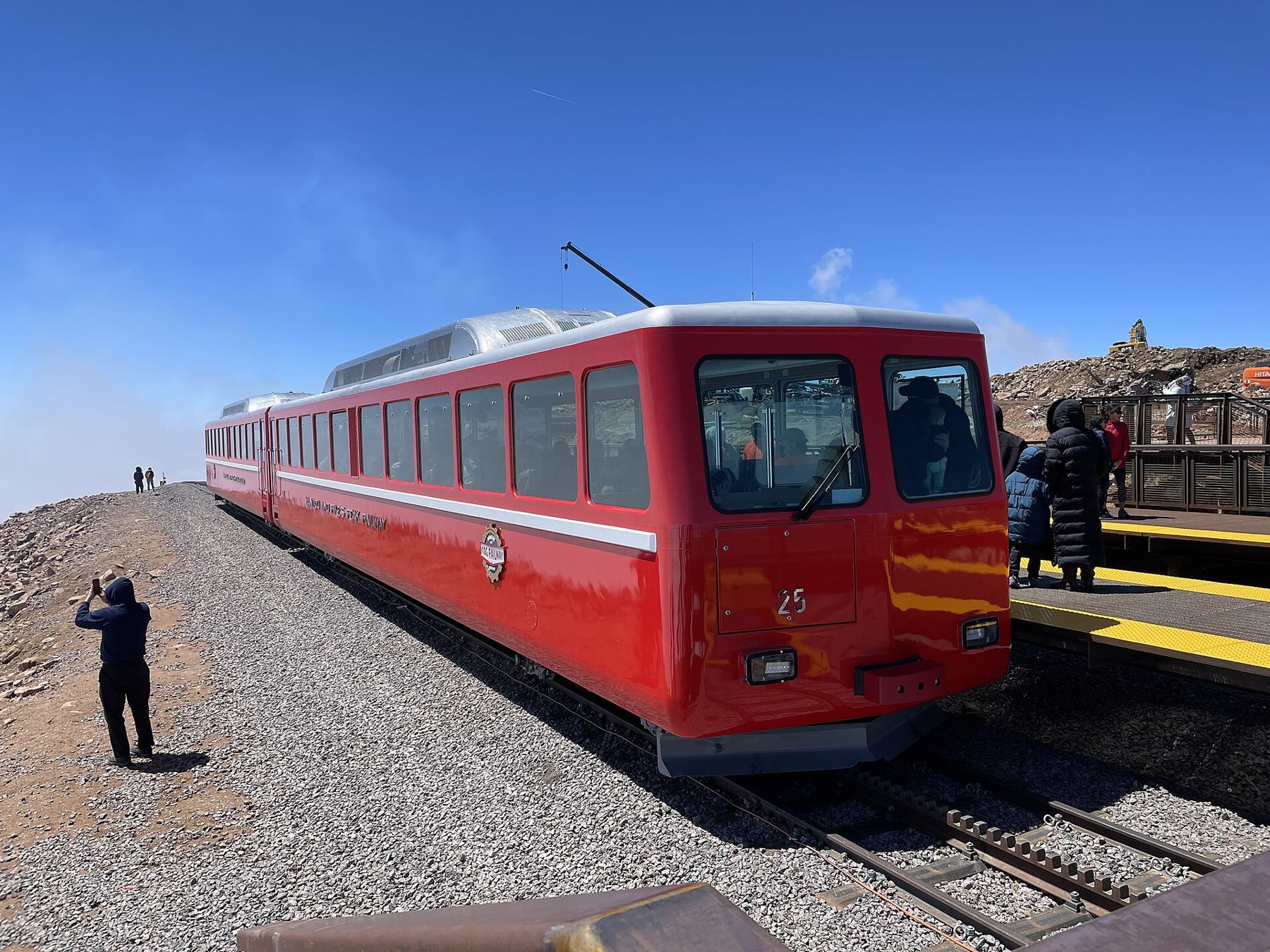
Children, older visitors and anyone with heart or lung conditions should take extra care. If you have a medical condition, talk to a doctor before riding to 14,000 feet. Even healthy visitors sometimes feel light-headed for a while after the descent.
Dress for a different climate, too. It can be 30 or 40 degrees colder at the summit than in Manitou Springs, with strong wind and fast-changing weather. A warm jacket, hat and sunglasses belong in your bag even on a summer day, and summer afternoons bring the same thunderstorms that drive hikers off the upper mountain. Read the guide to altitude and afternoon storms if you are planning a full day on the peak.
Booking, timing and the walk to the depot
Trains often sell out in summer and around holidays, so booking ahead is wise. Tickets are for specific departures, and prices, schedules and the season of operation change, so check the current details before you go. Weather can also close the upper line or shorten trips, especially in spring and autumn.
Parking near the depot is limited, and Ruxton Avenue is narrow. Walking up from downtown Manitou Springs takes you past the Iron Geyser on Ruxton Avenue, which is a fine place for a first taste of mineral water on the way to the train. Arrive early enough to board without rushing, since the climb begins the moment the train leaves the platform.
A few small choices make the trip better. Ask about a window seat when you book or board, since the long views over the plains are half the point of the ride. Carry a layer you can put on before you step off at the top, rather than digging for it in the wind. And if anyone in your group starts to feel unwell at the summit, tell the crew and stay near the train; the ride down is the best medicine there is.
The pictures on this page were shared under open licences; see who took them.